Why the fold matters
A fold is not just a finishing detail. It controls the order in which someone reads a brochure, pamphlet, folder insert, flyer, mailer, or event handout. The wrong fold can hide the most important message, make panels feel crowded, or create production issues when the sheet is trimmed and finished.
Choosing the fold early helps the designer build the file around the real finished piece. Panel widths, safe margins, image crossovers, paper weight, score lines, mailing panels, and final size all depend on how the piece opens. If the fold is decided after the artwork is finished, prepress may need to resize panels or move content before printing.
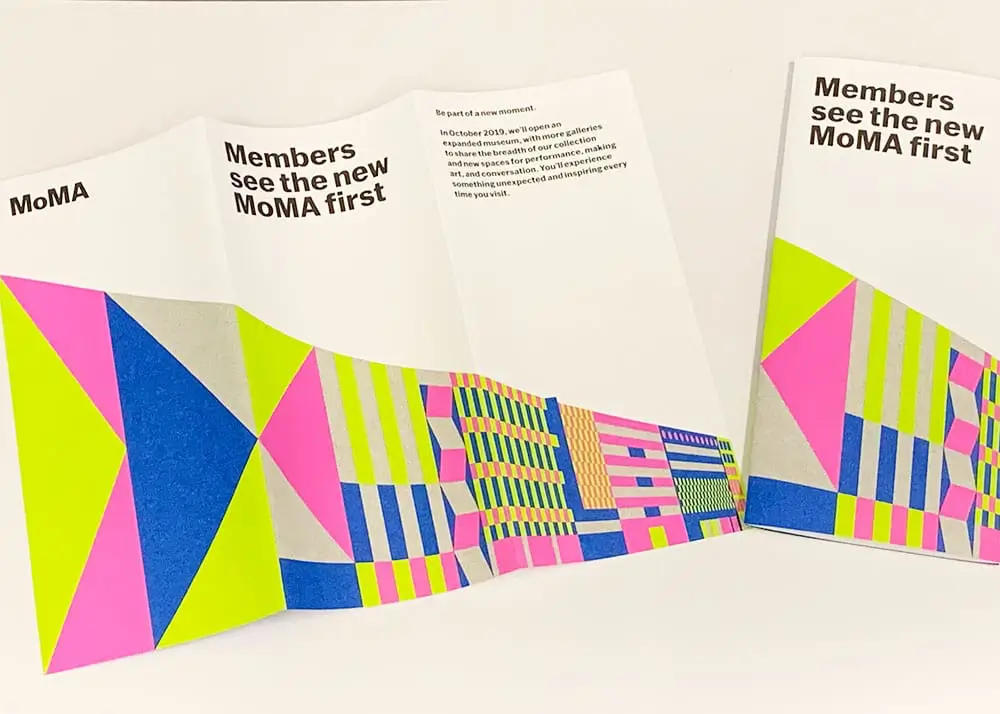
Tri-fold brochures
A tri-fold is one of the most common brochure formats. The sheet folds into three panels, with one panel tucked inside the others. It is compact, familiar, and easy to hand out or mail. Tri-folds work well for service overviews, restaurant menus, event information, and sales pieces with a clear front cover, inside reveal, and back panel.
Tri-fold panels are usually not all exactly the same width. The panel that folds inside often needs to be slightly narrower so the finished piece closes cleanly. Use a printer-approved template before placing text close to a fold.
Z-fold brochures
A z-fold also creates three panels, but the folds alternate direction so the finished piece opens like the letter Z. This format works well when each panel should stand on its own, such as step-by-step instructions, maps, event schedules, product tiers, or side-by-side comparisons.
Because a z-fold does not tuck one panel inside another in the same way as a tri-fold, it can feel more balanced for designs that need equal panel emphasis. It is also useful when the reader should see a sequence unfold from left to right.
Gate folds
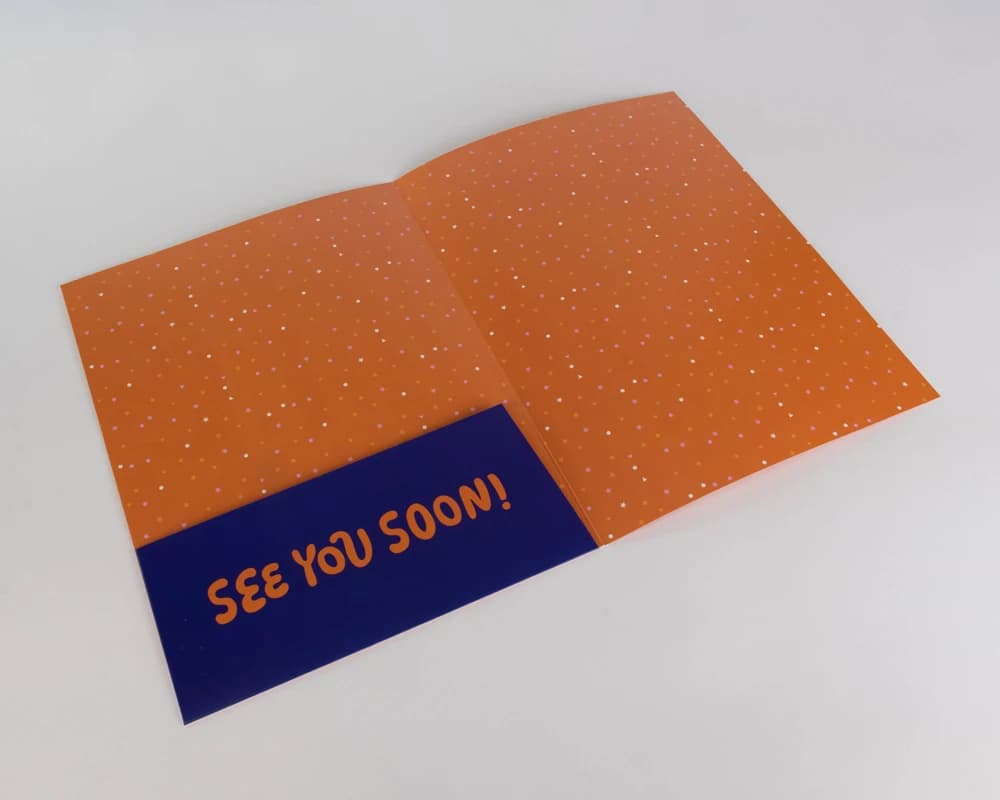
A gate fold has two outside panels that open toward the center, creating a reveal. It can make a product launch, invitation, presentation piece, or premium announcement feel more deliberate. The center spread can hold a large image, statement, offer, or brand moment.
Gate folds need careful alignment. If the two outside panels meet in the middle, small production tolerances become visible. Avoid placing tiny type or critical design elements directly across the closing seam unless the printer confirms the setup.
Roll folds
A roll fold uses panels that fold inward one after another. It can hold a lot of information in a compact format, which makes it useful for travel pieces, product guides, menus, and instructions. Each inside panel usually needs to get progressively narrower so the folded piece does not bind or buckle.
Roll folds reward clean hierarchy. Since the reader sees content in stages, decide what should appear on the first open, second open, and full spread before building the layout.
Accordion folds
An accordion fold uses alternating folds across several panels. It can expand into a long sequence, making it useful for timelines, maps, program schedules, gallery guides, product stories, and educational handouts. The finished piece folds down small but can open into a larger visual system.
Accordion folds can be simple or complex depending on the number of panels and the paper stock. Heavier paper may need scoring so the folds stay clean and the piece lies correctly.
Parallel and French folds
Parallel folds use folds that run in the same direction, often creating compact pieces with nested panels. French folds, also called right-angle folds, fold the sheet in one direction and then fold it again at a right angle. These formats can create a larger reveal and are often used for posters, maps, invitations, and pieces where the opening experience matters.
These folds can be highly effective, but they also require more production planning than a simple half fold. Confirm the final size, panel sequence, and paper before locking the design.
How to choose the right fold
Start with the job the piece needs to do. A tri-fold is usually best when the reader needs a familiar overview with a cover, inside panels, and back contact panel. A z-fold is better when each panel should read as a separate step, comparison, map section, or event detail. A gate fold works when the opening reveal is part of the message.
For information-heavy pieces, roll folds and accordion folds can create more panels without making the finished piece too large. They need more careful sequencing, because the reader will not see every panel at once. Put the strongest message on the first view, then use the inner panels for detail, proof points, product lists, or schedules.
Mailing can also decide the fold. If the piece will go through the mail, confirm the final folded size, address panel, tabbing requirements, paper weight, and postal rules before designing the layout. A fold that looks good as a handout may need adjustment to work as a self-mailer.
Folded file setup checklist
- Start with the final flat size and folded size, not only the visible front panel.
- Use the correct panel widths for the fold style.
- Keep text and logos away from fold lines unless the design intentionally crosses the fold.
- Add bleed on edges that trim, and keep safe margins around every panel.
- Confirm paper weight, grain direction, scoring, perforation, and mailing needs.
- Mark fold lines clearly in a guide layer or provide a folded mockup for reference.
Paper, scoring, and finishing
Paper choice affects how a folded piece feels and how cleanly it closes. Lightweight stocks fold easily, while heavier cover stocks may crack without scoring. Coated, uncoated, textured, and laminated sheets can all behave differently at the fold, especially when the artwork has heavy ink coverage.
If the piece also needs die cutting, foil stamping, embossing, perforation, or mailing, plan those details with the fold. The production order matters because one finishing step can affect the next.
Start your folded print project
Thomas Group Printing can help with folded brochures, pamphlets, folders, flyers, mailers, invitations, and presentation pieces. Contact us with the flat size, folded size, quantity, paper, deadline, and any mockup you have. We can help choose a fold that supports the design and prints cleanly.