Eco-Friendly Printing Choices
There has been an increased focus on climate change and the environment as sustainability continues to be an important topic for many customers. As more people push companies to make better environmental choices, professional printing often comes into the spotlight as a potentially wasteful industry.
It is a common misconception that printing companies make no considerations for the environment when responsible printers have made real progress in paper sourcing, material planning, press efficiency, recycling, and waste reduction. The goal is not to pretend that print has no footprint. The goal is to make informed choices so printed pieces are useful, well specified, and produced with less avoidable waste.
If eco-friendly printing is important to you and your customers, a professional printer can walk you through sustainable printing options, explain the tradeoffs, and help you decide where environmental choices will have the most practical impact for your project.
Paper
Paper is usually the first specification to review. Many projects can use recycled content, responsibly sourced paper, or paper that carries recognized forestry certification depending on the desired finish, budget, and availability. If certification matters for your organization, ask for that requirement before production so the right stock can be sourced and documented.
Paper that is recyclable or contains pre-consumer or post-consumer recycled content is often available upon request as an option for print projects. What your project is printed on is one of the most visible factors, but genuinely earth-conscious printing goes further than just the sheet itself. Weight, size, press efficiency, quantity, and finishing choices also affect waste.
For more detail on how paper choice changes the finished result, see our guide to different types of paper and their effect on print jobs.
Inks and Coatings
Special environmental consideration is also given to the inks and coatings used in the print shop. Petroleum-based inks can contain harmful organic compounds, while soy-based and vegetable-based inks may offer a more responsible option for some projects and can still produce bright, high-quality images.
Coatings should be chosen for a reason. Aqueous coatings, varnishes, laminates, and UV coatings all change appearance, durability, recyclability, drying time, and cost in different ways. Sometimes the most sustainable choice is a lighter-touch finish that still protects the piece for its intended use. Other times, a durable coating prevents damage and waste because the printed piece needs to travel, be handled repeatedly, or last longer.
Responsible printers also manage solvents, neutralizers, cleaning materials, and pressroom waste so production byproducts are handled properly rather than treated as an afterthought.
Reducing Waste and Reusing Materials
Professional printers can take more sustainable steps during the printing process by:
- Reducing the amount of paper needed during setup
- Turning scrap paper into newsprint rather than white paper, which requires more resources and chemicals
- Using recyclable or biodegradable packing materials to reduce landfill waste
- Helping customers choose practical quantities instead of over-ordering pieces that may expire before they are used
- Checking files carefully before press so avoidable reprints do not create unnecessary waste
Energy Consumption
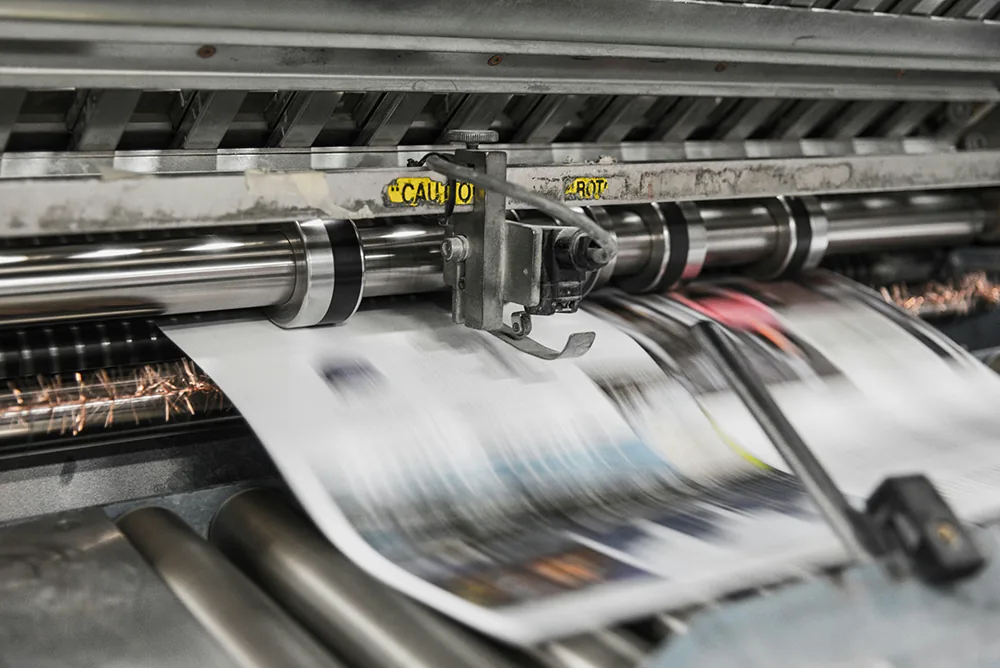
Sometimes, being earth-friendly is also possible in the operational details. Printers can contribute to sustainable practices by running machinery efficiently, reducing setup waste, maintaining equipment, batching compatible work, and using lighting or workflow improvements that reduce unnecessary energy use.
Not every environmental decision is visible in the final printed piece, but those choices still matter. Efficient prepress, accurate proofing, good scheduling, and careful finishing can reduce wasted materials while still producing a sharper finished product.
How to Plan a More Sustainable Print Project
Start with the purpose of the piece. A durable catalog, a short-term event postcard, and a premium presentation folder should not all use the same specs. Tell your printer how the piece will be distributed, how long it needs to last, whether it will be mailed, and whether your organization has recycled-content, certification, or plastic-reduction requirements.
Then review the practical levers: size, page count, paper weight, recycled content, coating, binding, quantity, mailing plan, and packaging. A smaller trim size, cleaner page count, lighter paper, or more targeted quantity can sometimes reduce waste without weakening the project. For longer pieces, proofing and file setup are especially important; see our guide to reviewing printing proofs before approval.
Questions to Ask Before Production
A sustainable print plan is strongest when it is specific. Before approving artwork, ask which paper options are available for the timeline, whether recycled content or certified stock can be documented, how the press sheet will be imposed, and whether the quantity matches real distribution instead of a round-number guess.
Also ask how finishing and delivery change the footprint. A heavier cover, plastic laminate, oversize trim, rush schedule, or multi-location shipment may be right for the job, but each choice should earn its place. When the design team, buyer, and printer make those decisions together, the project is more likely to use the right materials, avoid reprints, and still feel professional.
Production method can matter too. Shorter digital runs may help teams avoid unused inventory, while offset printing can be efficient for larger quantities once setup is complete. If you are comparing approaches, review digital printing vs. offset printing before locking specs.
Ask Us About Sustainable Printing Today
At Thomas Group Printing, we value sustainable printing and can help you compare paper, coating, quantity, and finishing choices before production begins. Whether you are planning brochures, catalogs, books, postcards, or branded materials, reach out today and ask how we can keep the project polished while making practical environmental choices.